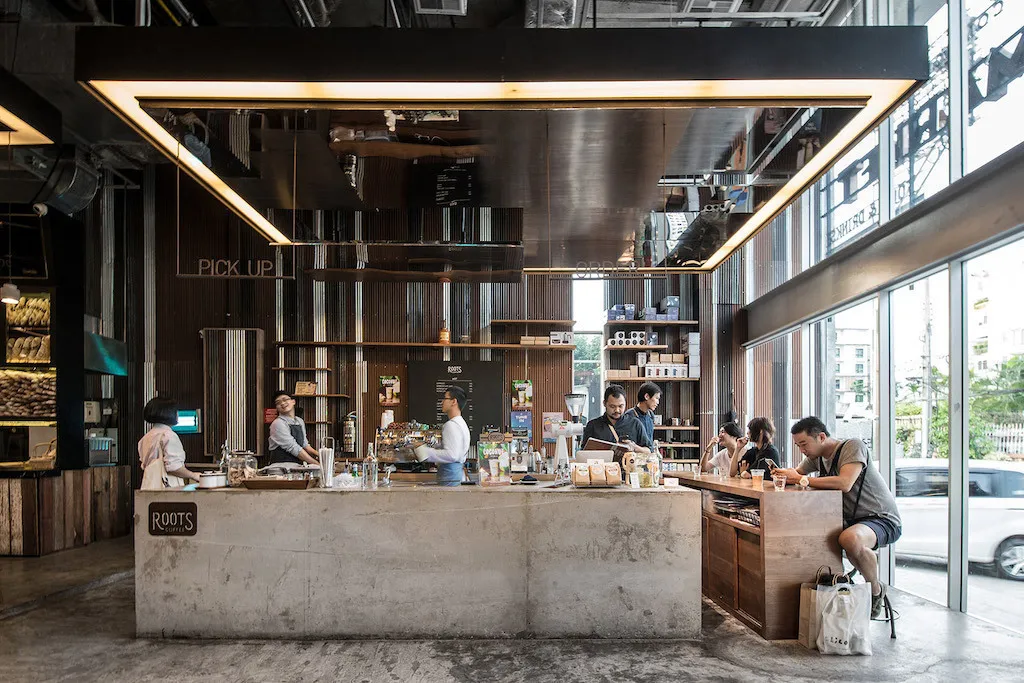
Coffee preparation is usually a means to an end. Across Bangkok’s speciality coffee scene, it is increasingly treated as part of the experience itself.
On a recent visit to Thailand, WDC Spaces Interior Designer, Elysia observed how cafés across the city are bringing together product, process and place. Baristas are positioned in full view, existing buildings are being reused with care, and layouts are designed around the different ways customers want to spend their time.
The result is a varied hospitality landscape in which design helps communicate not just what is being served, but why it is worth stopping for.
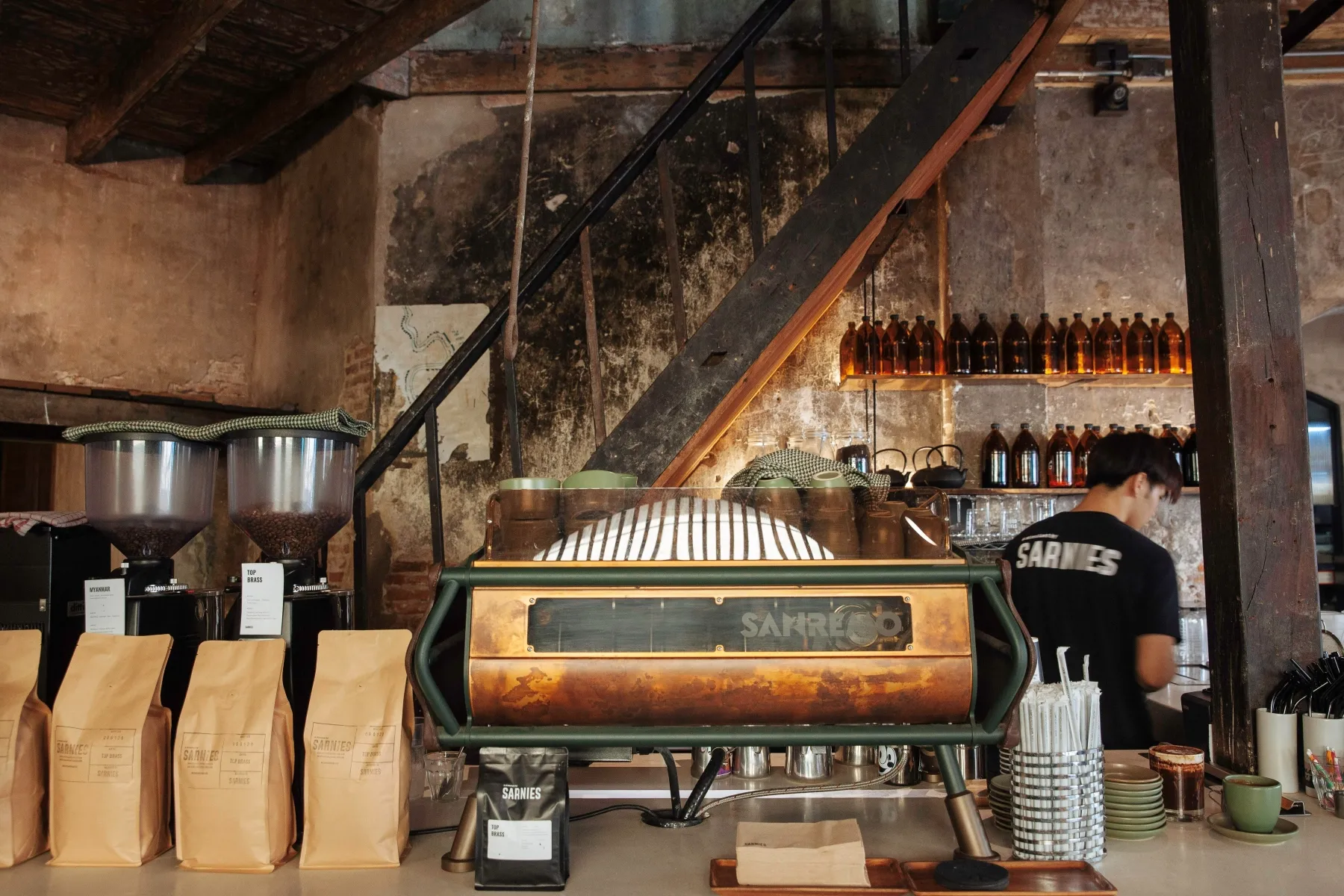
Bangkok’s artisan coffee shops offer everything from speciality blends and single-origin beans to signature brewing methods. Cafés such as Akkrasi, Sarnies, Milkbar and Gallery Drip Coffee provide different interpretations of the experience, ranging from intimate neighbourhood spaces to more contemporary branded environments.
Their interiors are not interchangeable. Each uses atmosphere, furniture, materials and presentation to reflect a particular point of view.
That distinction matters in a competitive hospitality market. Customers may arrive for the coffee, but their understanding of its quality begins before the first sip. The entrance, menu, counter, lighting and interaction with the barista all contribute to the perceived value of the offer.
Throughout Bangkok, coffee preparation is frequently placed where customers can see it.
Grinding, measuring and brewing become part of the theatre of the venue. This gives customers a closer connection to the product and provides reassurance that care is being taken at every stage.
It also gives the interior a natural focus. Instead of relying entirely on decoration, the activity of the team creates energy within the space. Materials, lighting and sightlines can then be arranged to frame this activity rather than compete with it.
For hospitality design, this is a useful principle: the most engaging feature of a space may already exist within the operation. Good design makes it easier to see and understand.
Many of Bangkok’s coffee shops accommodate more than a quick transaction. They provide space for customers to work, meet, relax or take part in events.
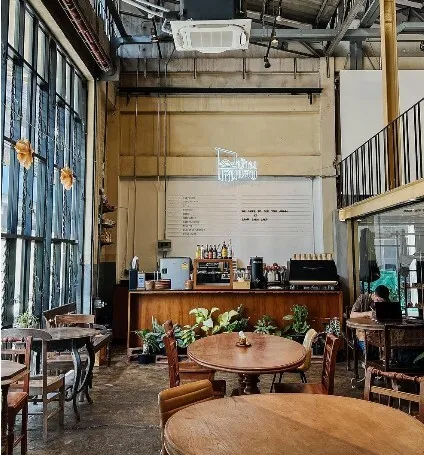
Baan Saen Saep Brewing Co occupies a converted former publishing warehouse that also supports young businesses, exhibitions and social activity. The setting gives the café an existing story to work with.
A large steel-framed window introduces natural light, while timber, antique furniture and concrete surfaces retain the character of the building. Contemporary equipment and neon branding provide contrast without erasing what was already there.
The mix feels collected rather than overly controlled. It also allows the space to support several types of visit, from a brief coffee stop to a longer period of work or conversation.
For operators, flexibility of this kind can make a venue useful to more people across a greater proportion of the day.
The reuse of an existing building at Baan Saen Saep Brewing Co also demonstrates the value of working with what is already present.
Original materials and architectural details can help a venue feel rooted in its location. Selective intervention can then improve comfort, circulation, service and brand visibility without removing that character.
This approach can have practical benefits too. Retaining suitable elements may reduce material use and avoid unnecessary replacement. The important consideration is to assess each element for its durability, maintenance requirements and contribution to the wider customer experience.
Responsible hospitality design is not about preserving everything. It is about making informed decisions about what should stay, what should change and how the space can adapt in the future.
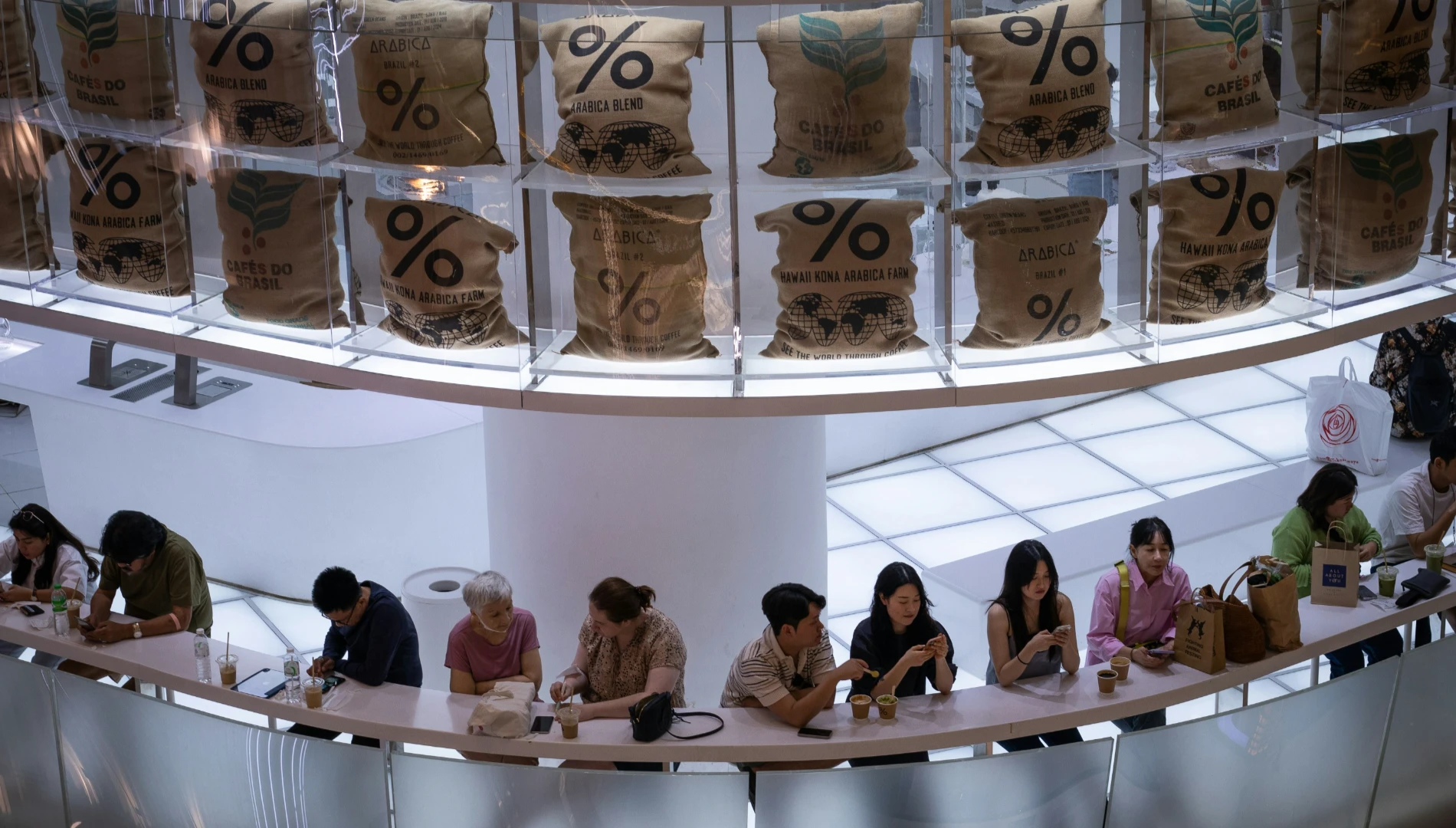
At ICONSIAM, a bright white coffee store offers a contrasting example.
Rather than working with the texture of an older building, the interior creates impact through clarity and control. A central coffee counter forms the main organising element, with seating arranged around the outside.
Customers can watch the baristas from different positions, while mirrored ceiling panels reflect the preparation process and increase its visual presence.
The layout gives the operation a prominent role in the customer experience. It can also support clearer ordering, more direct interaction and efficient service during busy periods.
Here, the counter is not simply a piece of equipment. It communicates the product, structures movement and establishes the character of the space.
Bangkok’s coffee shops vary significantly in appearance, but the strongest examples have something in common: their design begins with a clear understanding of what customers are being invited to experience.
In one venue, that might mean retaining the character of an existing building and encouraging longer stays. In another, it might mean using a central counter to make precision and preparation highly visible.
Neither approach is inherently better. What matters is the connection between the product, the operation, the brand and the customer journey.
When those elements work together, design becomes more than a backdrop. It helps customers navigate the space, understand the offer and remember how the experience felt.
Whether you are developing a new café concept, refreshing an existing restaurant or improving a wider hospitality estate, the physical environment needs to balance guest experience with the realities of operation.
WDC Spaces works with hospitality and leisure operators to shape concepts, layouts, materials, furniture, brand touchpoints and delivery plans around a clear commercial and customer brief.
Considering how your venue could work harder for customers and your team? Start a conversation.
Created on
August 8, 2023
Last updated on
July 22, 2026