A strong retail concept should never stand still.
As a brand evolves, its physical spaces need to evolve with it. However, that does not mean starting again with every new store. The challenge is understanding which elements should remain consistent, which can flex and where there is an opportunity to introduce something new.
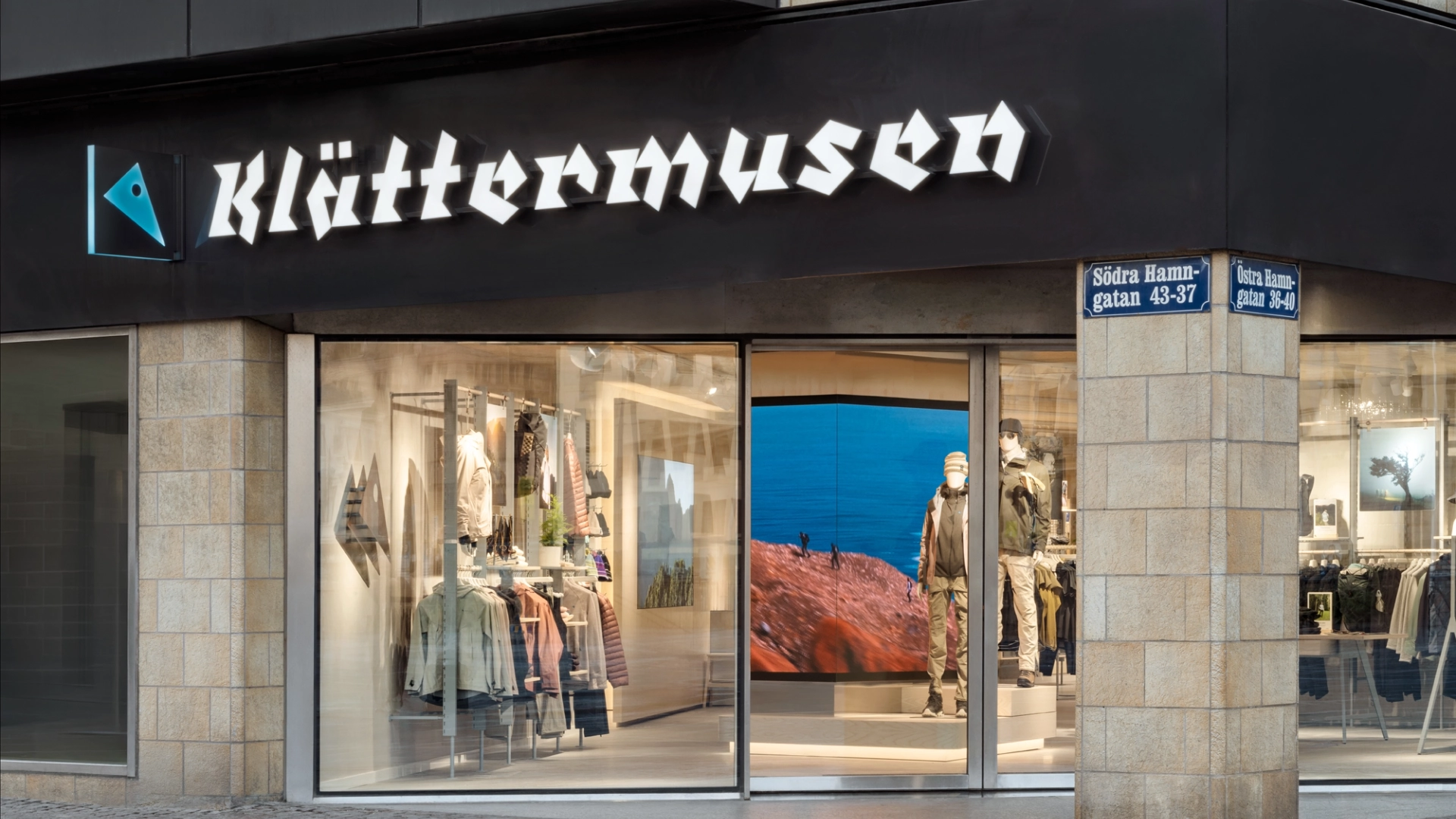
Our work on the recently opened Klättermusen store in Gothenburg highlights how retail design can evolve with a brand, introducing new ideas while staying true to its core character. Sustainability, beautiful materials and technical detail are central to the brand, but each store provides an opportunity to interpret those values differently. The result is a retail concept that feels recognisably Klättermusen without every location feeling the same.
Rolling out a retail concept can easily become an exercise in repeating what has already worked. Yet stores exist in different buildings, cities and markets; where their proportions, customer journeys and opportunities change.
Rather than forcing the same layout and details into every location, a stronger approach is to identify the principles that make the concept distinctive and allow the design to respond to the individual site.
This means brand consistency comes through the thinking behind the space, rather than simply repeating the same fixtures, finishes and layouts.
Klättermusen's Gothenburg store is the brand's largest location to date, creating an opportunity to explore the retail experience at a different scale.
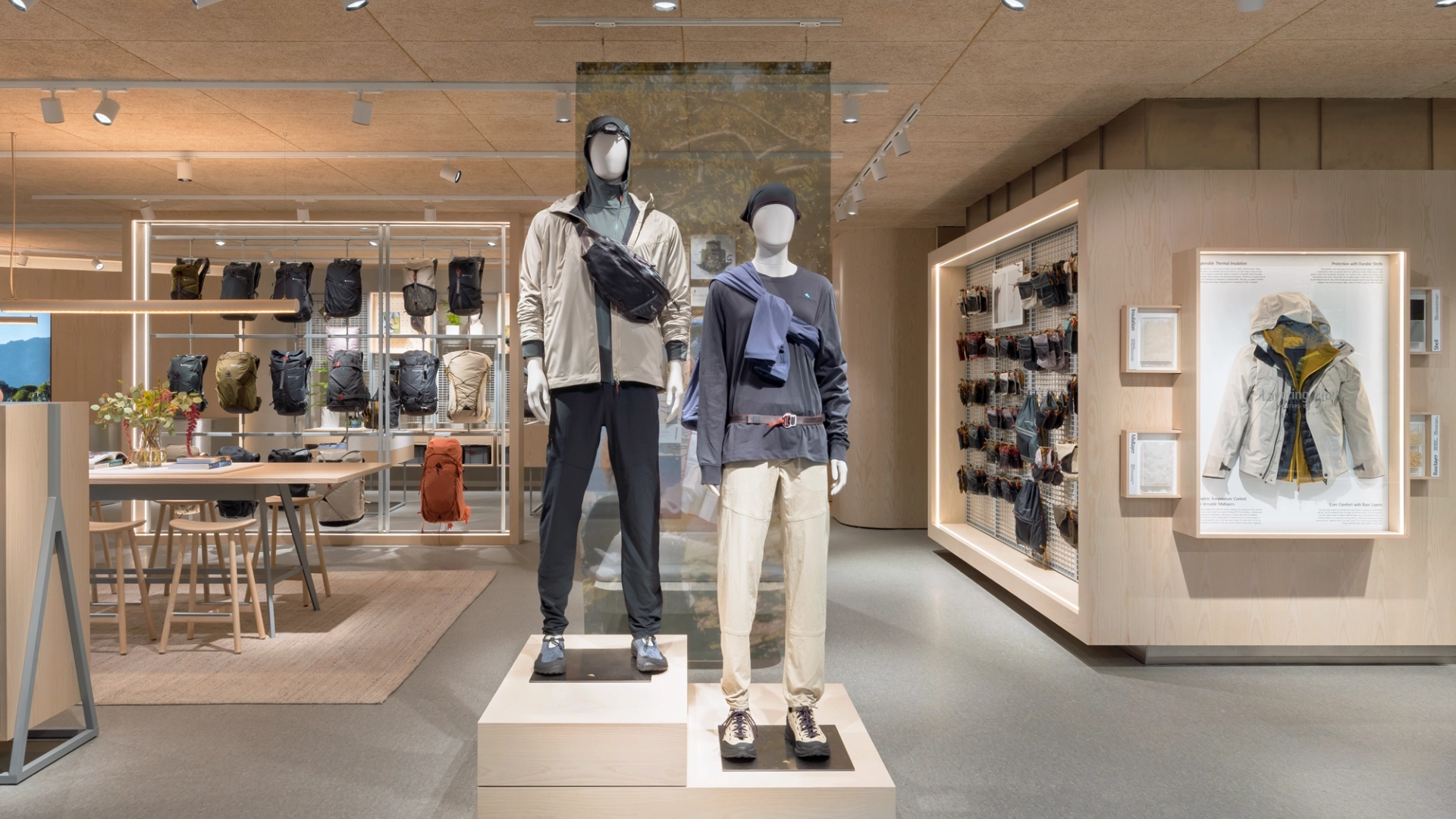
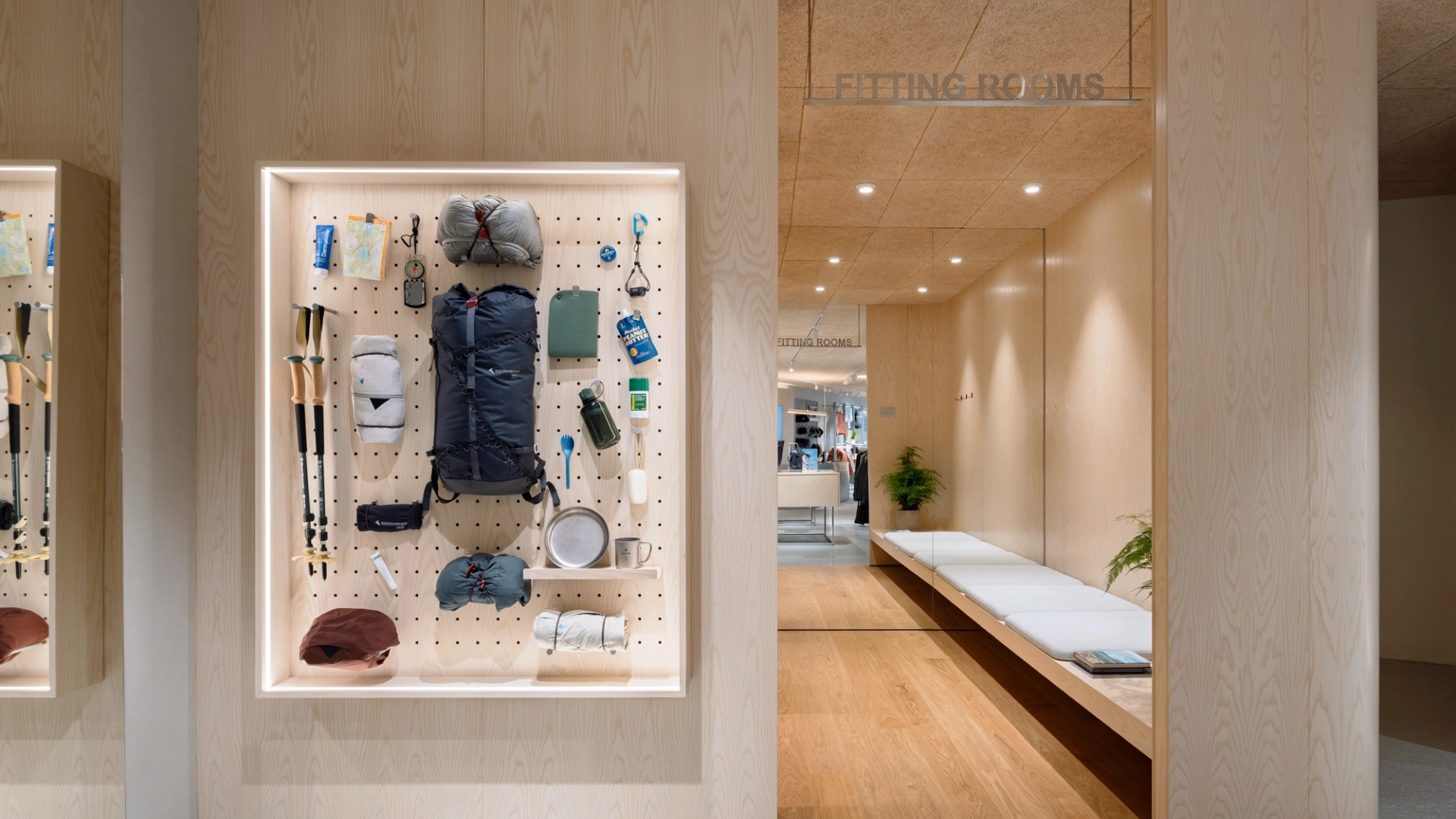
The layout was developed around a journey of discovery, with a community space positioned at the heart of the store. Rather than revealing everything immediately, customers move through the store space, layers and changing views.
That idea also connects back to the product itself.
Layering is fundamental to preparing for the outdoors, so the principle was translated into the interior through freestanding walls, translucent fabric partitions and overlapping elements that gradually reveal different areas of the store. It gives the space its own character while remaining connected to the world of the brand.
Site-specific retail design can also create a stronger relationship between a store and the city around it.
In Klättermusen’s new Gothenburg store, the material palette draws on details found within the city rather than introducing references simply for decoration. A curved tiled wall takes inspiration from Gothenburg's fish market, while zinc standing-seam panels reference the metal roofs that form part of the city's architectural character.
These ideas are then carried into smaller details throughout the store, including zinc plaques that tell the story behind individual materials. Discovering them becomes almost like a treasure hunt, adding another layer to the customer experience.
That Scandinavian design influence continues through the furniture and lighting. The feature light is Snøhetta and ateljé Lyktan's Superdupertube, made using a bio-based material combining hemp fibres with sugarcane-derived PLA, while the Arc Stools by Swedish furniture maker Edsbyn were designed by Jens Fager for the Swedish Nationalmuseum. The stools' solid timber construction, Nordic character and carefully considered detailing sit naturally alongside Klättermusen's own emphasis on materials, longevity and technical detail.
Material choices are not only about appearance.
For Klättermusen, sustainability forms part of the wider brand philosophy, so it needs to be reflected in how the stores are designed and specified.
Carbon-positive Marmoleum flooring, responsibly sourced timber and acoustic wood-wool ceiling panels allow environmental considerations to become part of the physical experience rather than an additional message applied afterwards.
The material palette still needs to feel considered and tactile, but every selection has a reason for being there. That combination of aesthetics, function and responsibility gives the design greater meaning.
Bringing a brand into a space does not always require prominent logos or graphics.
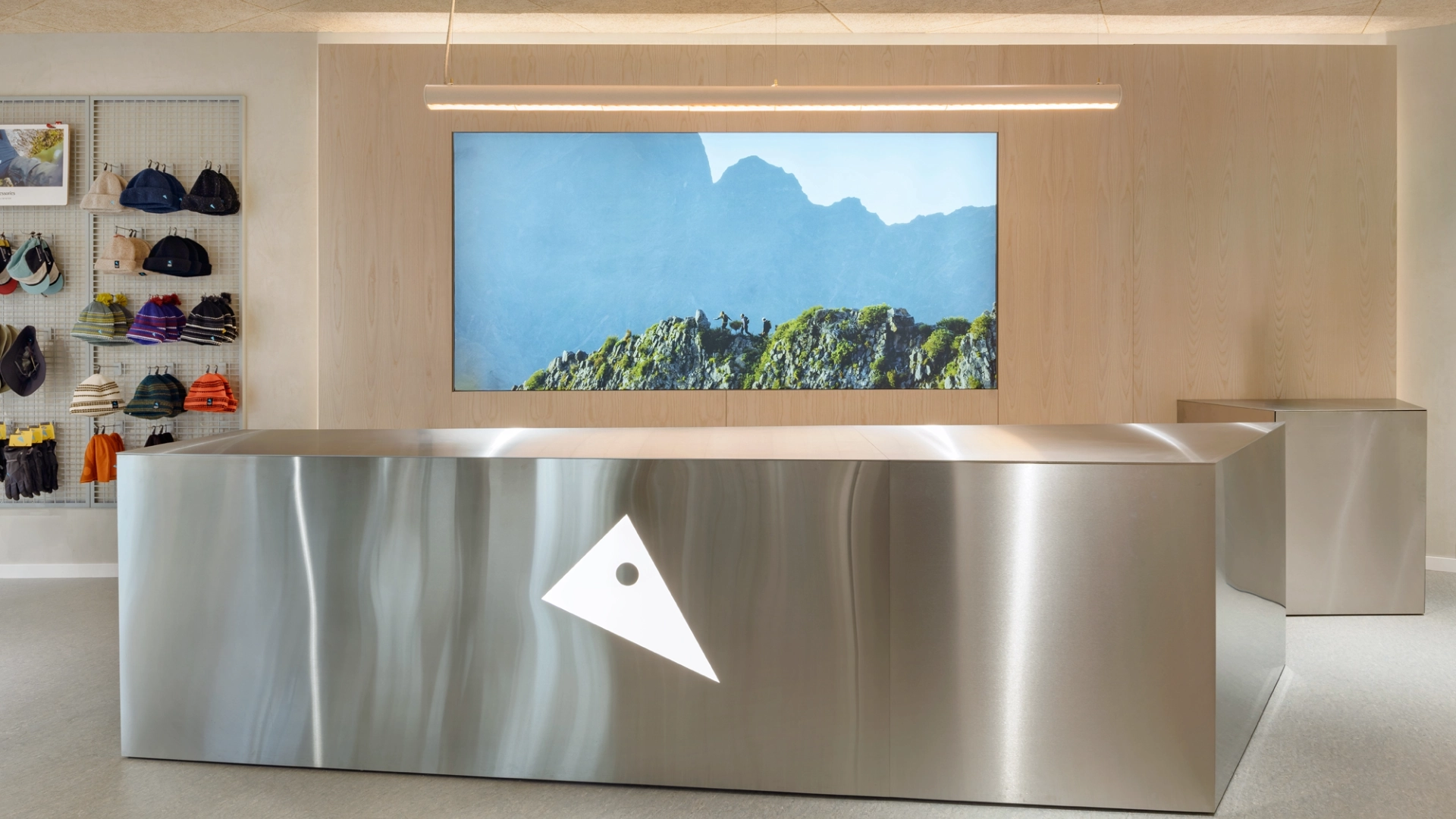
Klättermusen's triangular logo provides a simple geometry that can be interpreted through the architecture and fixtures instead. In Gothenburg, the triangular form is reflected in elements such as the cash desk, where the geometry works alongside the Klättermusen logo to reinforce the brand identity in a considered way.
These quieter details help build recognition across the space while allowing the architecture, products and materials to remain central.
For us, the interesting part of developing a retail concept over multiple locations is not working out how closely the next store can replicate the last one.
It is understanding how far the idea can evolve while still feeling unmistakably connected to the brand.
The constants might be values, materials, customer behaviours or particular design principles. Everything else can respond to the building, the city and the opportunity presented by that particular project.
Whether you are developing your first store or evolving an established retail concept across multiple locations, we can help define what should stay consistent, where the design can flex and how each space can feel individual without losing sight of the brand.
Talk to us about your next retail space.
Created on
October 7, 2026
Last updated on
October 7, 2026
.webp)