For established retail brands, consistency matters. However, consistency does not mean every store should deliver exactly the same experience.
A flagship, a full-price store, a concession and a factory outlet all sit within the same brand world, but they exist to do different jobs.
That distinction becomes particularly important when designing outlet environments.
Factory outlets are commercially different by nature. They typically carry greater volumes of product at higher densities, with stock often focused on previous-season, excess or clearance lines rather than the current collection. Customers arrive with different expectations too, with value, choice and product discovery playing a much greater role in the visit.
The challenge is adapting the retail experience around those realities without allowing the brand itself to become diluted.
Outlet environments generally need to be delivered at a lower cost than higher-investment retail concepts. They also need to accommodate greater volumes and densities of product to make the format work commercially. Inevitably, that means the concept has to be scaled appropriately – but not stripped of everything that makes the brand distinctive.
The role of design is to understand which elements of the wider brand experience matter most to the customer and protect them, while finding more commercially efficient ways to deliver the rest.
It is a balancing act between brand, customer experience and the realities of the retail model. Simply taking a flagship concept and removing materials, details and features until it reaches an outlet budget is rarely the right answer. It can quickly result in a store that technically carries the same logo but no longer feels like the same brand.
Instead, the question should be: what must remain for this environment to still feel unmistakably ours?
Cost engineering sometimes gets interpreted as a process of taking things away. Done properly, it is much more considered than that.
It means understanding the hierarchy of the concept: identifying which elements create the strongest brand recognition, which materially affect the customer experience and which can be adapted without undermining either.
A distinctive fixture language might be important. A particular material, colour or architectural feature might immediately communicate the brand. Certain lighting principles or graphic moments might do more for recognition than a more expensive finish elsewhere in the store. Those elements can then be prioritised.
Other parts of the environment can be simplified, rationalised or delivered differently to achieve the commercial requirements of an outlet store.
The objective is not to reproduce the flagship for less. It is to create the right expression of the brand for that retail format.
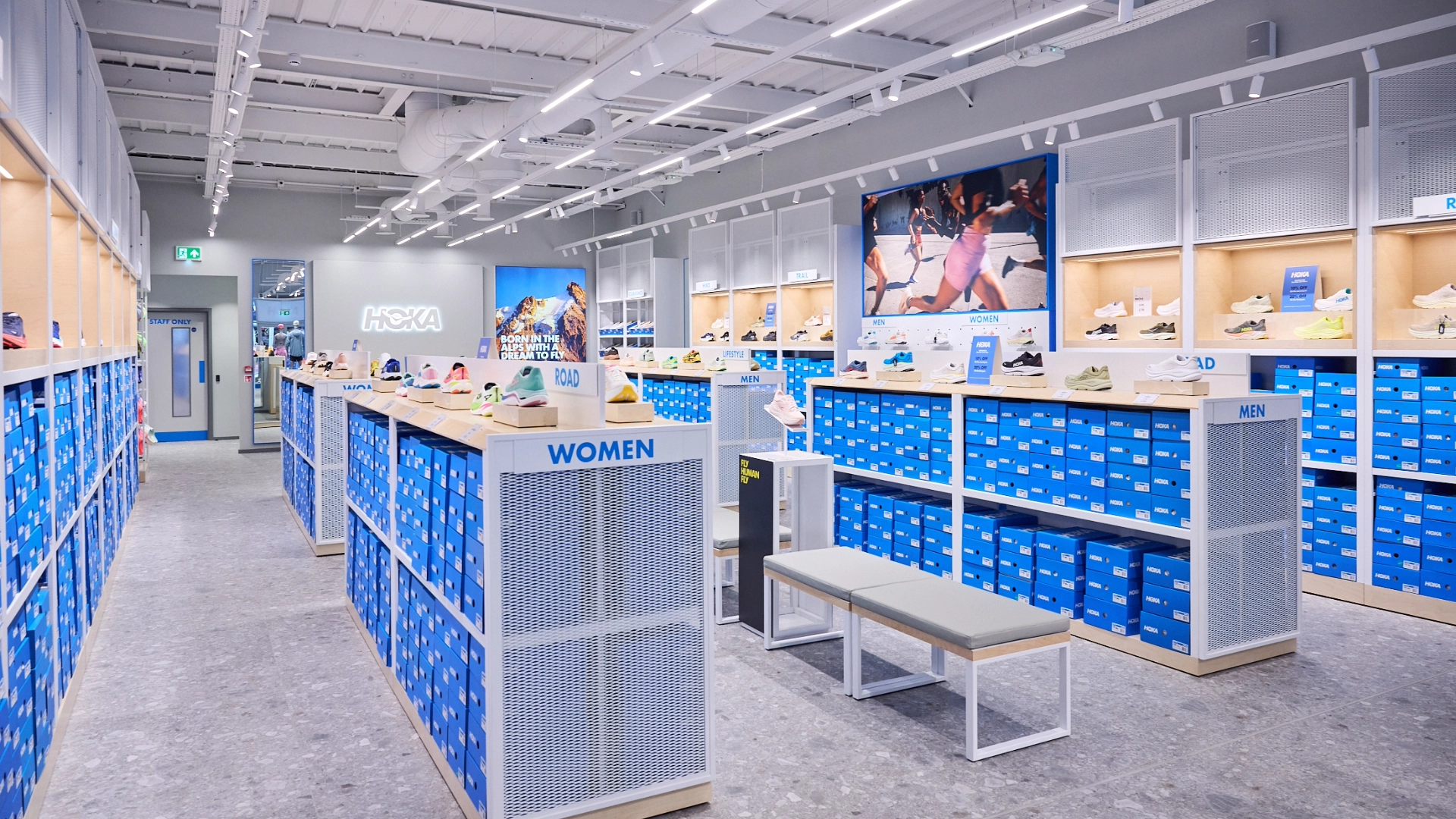
Product density has a significant influence on how an outlet store needs to work.
A flagship may have greater freedom to create space around hero products, new launches and storytelling moments. However, a factory outlet frequently needs to display a lot more stock which changes the role of the interior.
Fixtures must work harder and product categories need to be immediately understandable. Navigation becomes increasingly important, and customers need to be able to browse a larger volume of merchandise without the environment becoming visually overwhelming.
This is where brand management and practical retail design intersect.
Reducing unnecessary complexity can actually make the experience stronger. Clear fixture hierarchies, intuitive customer journeys and carefully controlled brand moments can create an environment that feels considered even when significantly more product is being displayed.
The customer walking into an outlet store may also be approaching the brand differently.
For some, it is an opportunity to access a brand they already know at a different price point. For others, an outlet may actually be their first physical interaction with the brand. That makes the experience important.
Value can be prominent without making the environment feel cheap. High product density can be commercially necessary without creating clutter. Clearance merchandise can be presented clearly without turning the store into a purely transactional space.
An outlet may occupy a different position within the retail estate, but it is still a branded environment.
The same design specification does not need to appear everywhere. In fact, trying to force it across every format can work against both the commercial model and the customer experience. What should remain consistent is the how shoppers feel.
A customer should understand that they are in the same brand world whether they are visiting a flagship, a shopping-centre store or an outlet – even when the way that world is expressed changes significantly.
That requires a clear understanding of which parts of the brand are fixed and which can flex.
For brands operating across multiple retail formats, that flexibility is becoming an increasingly important part of successful rollout.
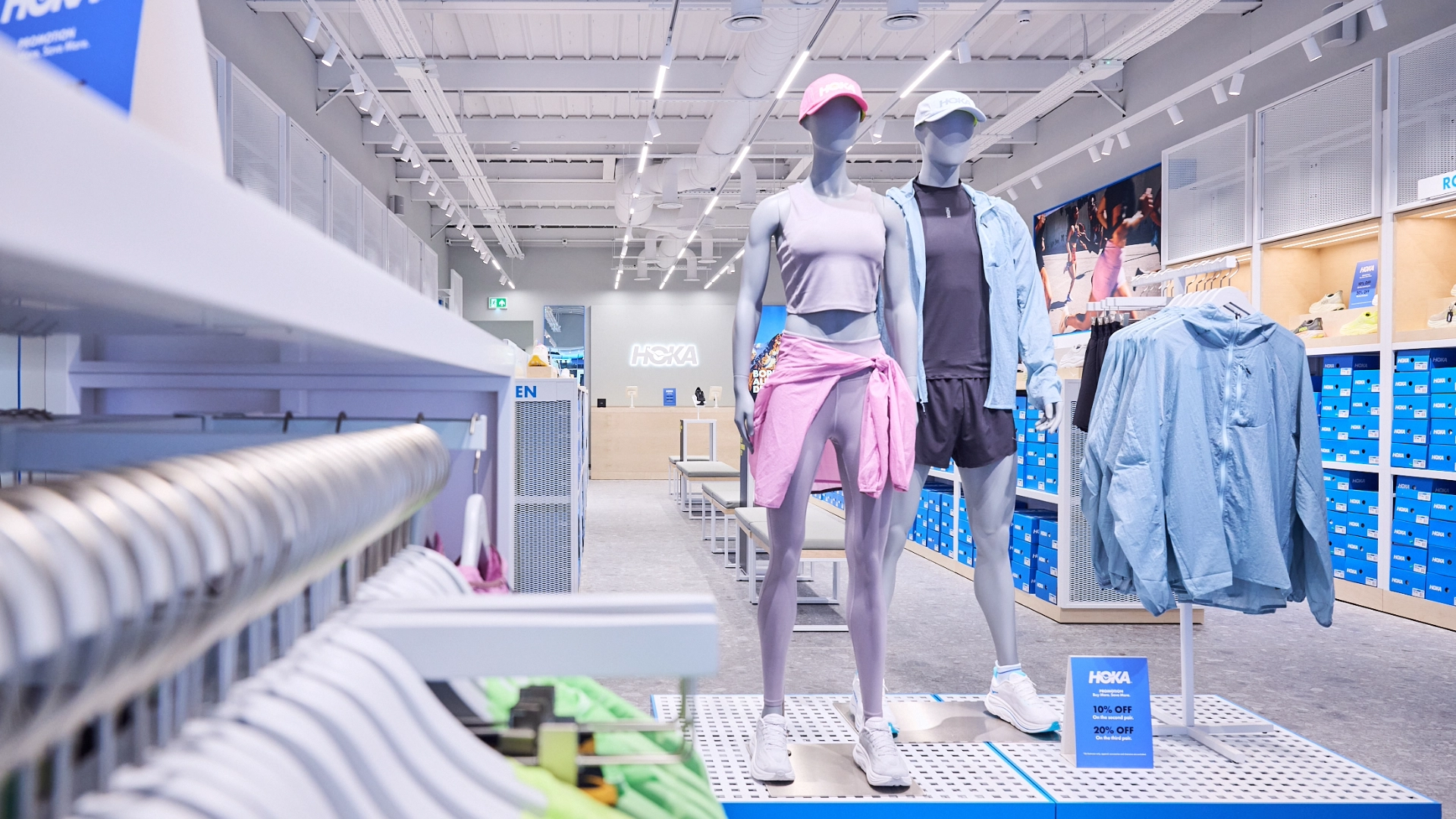
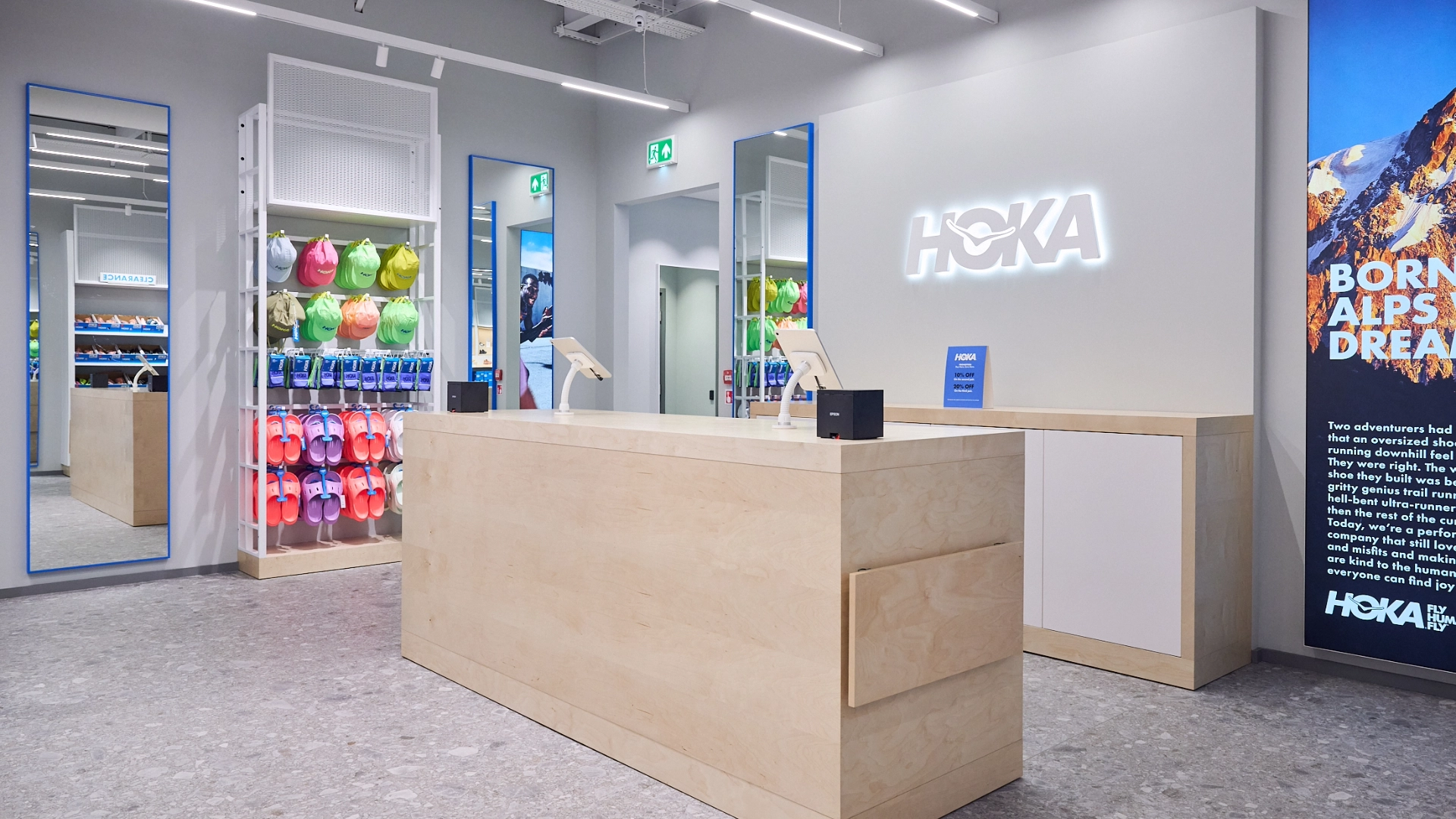
This was an important consideration in our recent work supporting HOKA with the rollout of its Cheshire Oaks factory outlet.
The environment needed to accommodate the commercial requirements of outlet retail, including greater product density and a different customer mission, while maintaining the distinctive HOKA brand experience.
The focus was on understanding which elements needed to be protected and where the design could flex to suit the format.
That is ultimately what successful outlet design should achieve. Not a brand experience stripped back beyond recognition, but a commercially appropriate environment that understands why the customer is there, what the store needs to achieve and which elements of the brand can never be compromised.
From flagship and full-price stores to factory outlets, we help brands identify what needs to remain consistent, where a concept can flex and how the right customer experience can be delivered without losing what makes the brand distinctive. Talk to us about your next retail project.
Created on
August 25, 2026
Last updated on
August 25, 2026
.webp)